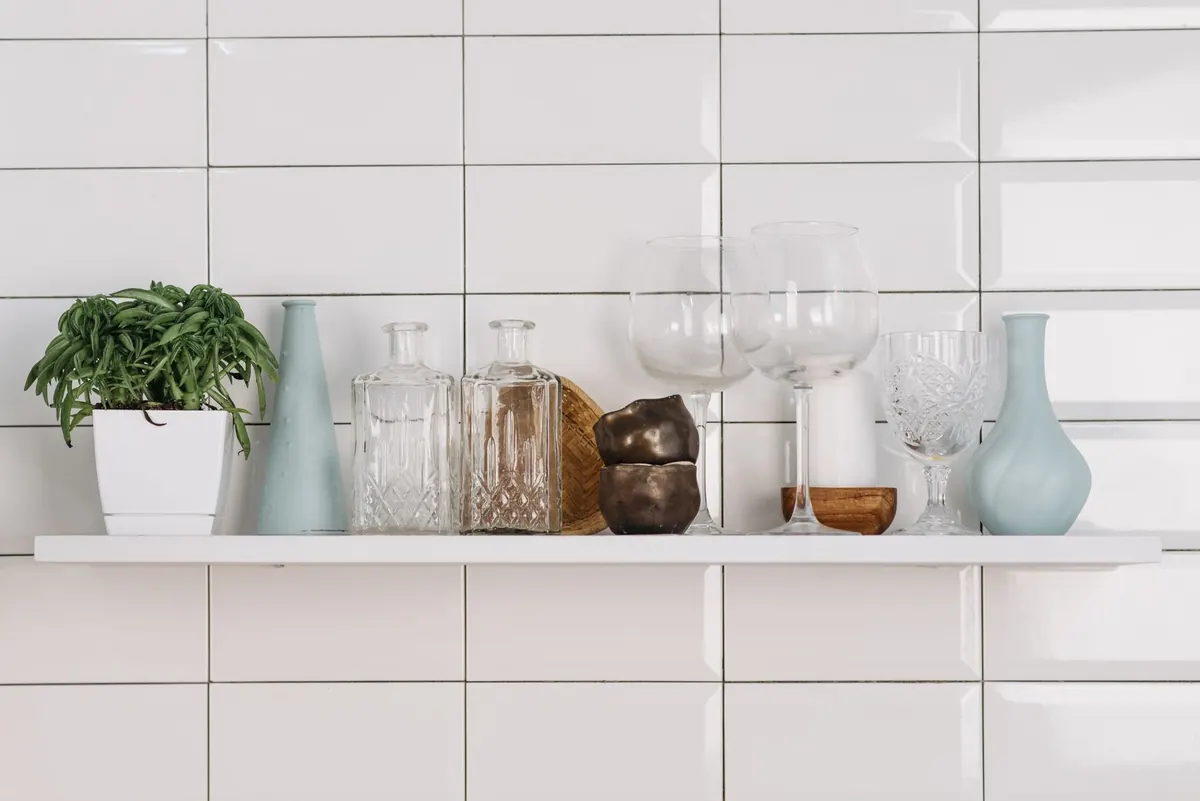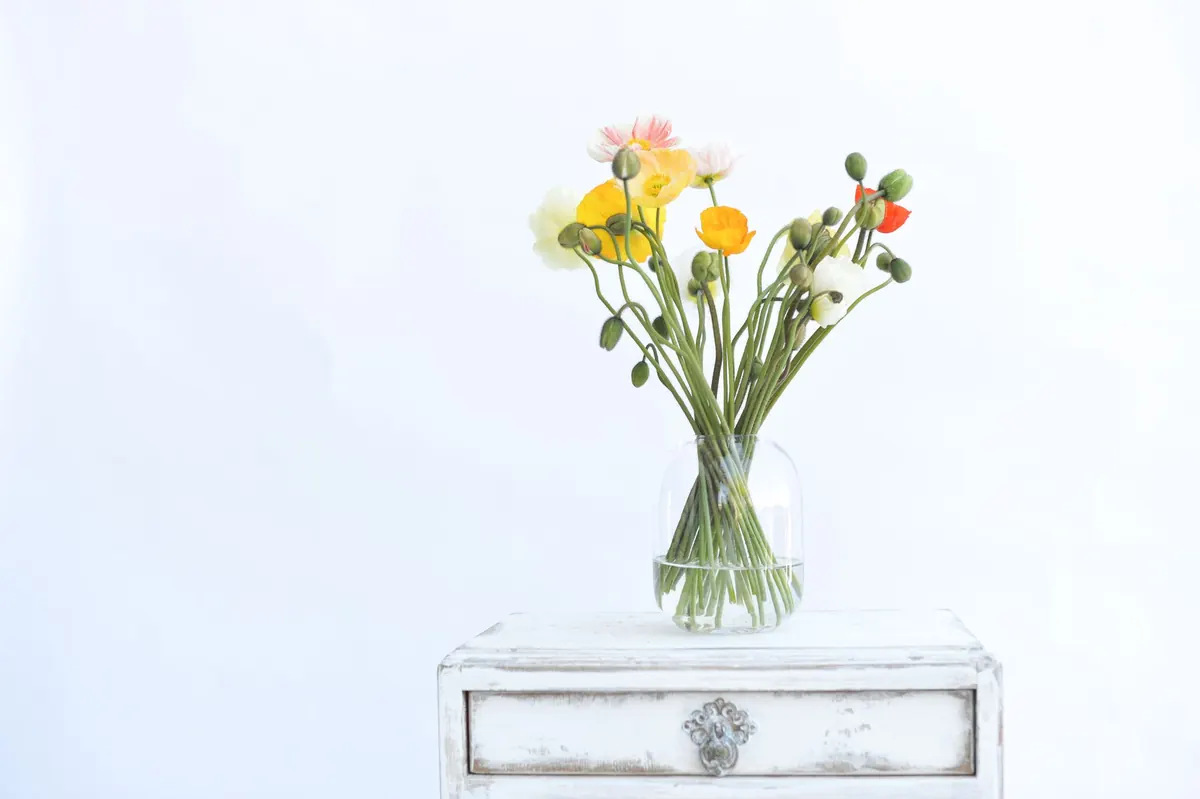
Seasonal Shelving: How to Refresh Your Shelves for Spring
The light changes before the weather does. One morning in early March you walk past the alcove shelves and notice that everything on them looks a bit heavier than it did in November: dark bookends, a fat candle, three black-framed prints sitting shoulder to shoulder. None of it is wrong. It simply belongs to a different season.
Refreshing shelves for spring is mostly a job of editing rather than shopping. A handful of swaps — lighter materials, paler glazes, a few stems of something green — will do more than a full restyle, and you can finish the whole thing in an afternoon.
Start by emptying the shelf
Take everything off one shelf at a time and give the surface a proper wipe. Dust is the enemy of a fresh-looking shelf, and you will not see how much has settled until the shelf is bare. Empty shelves also make the decisions easier: with nothing in front of you, you are choosing what earns a place rather than shuffling what is already there.
Sort the contents into three groups — keeping, storing until autumn, and leaving the room entirely. Most of us own far more shelf objects than any shelf needs. A wintry arrangement might hold nine or ten pieces; a spring one will look better with five or six.
Let the light do the work
Spring shelves should look as though daylight passes through them. That is a question of material and finish as much as colour. Dark stained timber, black metal frames, heavy opaque ceramics and high-gloss glazes all absorb light and read as winter. Pale ash, birch, rattan, cane, clear glass, linen, unglazed stoneware and matte off-white ceramic throw it back into the room.
Two inexpensive tricks are worth knowing. If your shelf unit has a solid back panel, painting it a chalky off-white lifts everything in front of it — an afternoon's work with a small tin of paint, though do check what the panel is made of and use a primer suited to it. A mirror, either fixed behind an open shelf or simply leaning nearby if it can be done safely, doubles the light and makes a narrow alcove feel twice as deep.
Six swaps that lighten a shelf
- Dark wooden or marble bookends → a pair in pale ash, or lean the books against the shelf end and use nothing at all.
- A fat pillar candle → a small glass bud vase with a single narcissus or three dried stems.
- A chunky wool throw → folded linen or cotton in a soft neutral, folded loosely rather than pressed flat.
- Dark glazed pots and planters → white speckled stoneware, terracotta, or a clean jam jar with the label soaked off.
- Black picture frames → oak, pale wood or slim brass. Keep to two or three so the frame does not compete with the picture.
- A crowded row of faux flowers → one variety of fresh or dried stems in a plain vessel. Three stems of eucalyptus will do more than a mixed bunch.
One rule covers the rest: if you cannot describe an object in a single word — shell, blue, photograph — it is clutter, and it can go into the storage box.
Bring in something growing
Nothing says spring like a plant, but shelf plants have particular conditions: still air, often a radiator below, often out of easy reach of a watering can. Choose accordingly.
Easy on a shelf
Spider plants, devil's ivy, hoya and small succulents cope well in ordinary rooms with reasonable light. Trailing plants look best at the end of a shelf where the vine can fall freely rather than tangle with a book stack. Ferns prefer a bright bathroom. Give every pot a saucer or waterproof liner, water less than you think in early spring while growth is still slow, turn pots a quarter turn each week so they do not lean, and keep water well away from sockets and electronics.
Spring bulbs and herbs
Forced hyacinths, narcissi and muscari in glass jars give you colour for two or three weeks and then spend themselves. Treat them as you would cut flowers and enjoy them while they last. A kitchen shelf near a window is the right home for supermarket herbs — basil, mint, parsley — which earn their place twice over.
Three spring colour palettes
Chalk and clay
Off-white, soft pink and dusty terracotta, with matte finishes. It suits rooms with warm afternoon light and looks especially good against pale walls.
Garden green
Sage, fern green, plain white and a little natural wood. Quiet, forgiving and easy to live with. Group the greens together rather than scattering them along the shelf.
Soft coastal
Pale sky blue, warm white, rattan and bleached wood, with one navy accent from a book spine or a striped box. Good in a dark hallway. Stop at two blues; more starts to look like a themed display.
Pick one palette per shelf unit rather than for the whole house. Colour consistency at shelf level reads as intentional. The same colours in every room reads as a showroom.
Grouping, spacing and the one-third rule
Vary the heights. Work in odd numbers — three or five objects — and build small triangles: something tall, something medium, something low. Layer front to back, with books behind and a smaller object in front, and put the tallest piece towards one end rather than dead centre. Leave roughly a third of each shelf bare; the gaps are what make the rest look considered. Give each shelf one hero, whether that is a photograph, a vase or a plant, and let everything else support it.
A spring refresh in one afternoon
- Empty one shelf and clean it properly.
- Choose your palette before anything goes back.
- Sort the contents into keeping, storing and leaving the room.
- Select three to five objects, including at least one living thing and one with texture — a woven basket, a linen slipcover, an unglazed pot.
- Return the tallest item first, then build outwards.
- Leave about a third of the shelf empty.
- Check wall fixings, saucers and trailing vines. Anything above head height needs to be fixed securely for the wall type; heavy items should not sit on a shelf that has never been properly anchored.
- Step back three paces and look. Then live with it for a week before touching anything else.
Do one shelf a week rather than the whole room in a single push, and the change will feel gradual but lasting. If an object still looks heavy once the daffodils are out, move it elsewhere in the house rather than buying a replacement — the point is to let the season in, not to spend. Come June you will want peonies in place of the hyacinths and a paler throw folded on the top shelf, and that is exactly how it should be. Shelves are not a permanent installation. They are a small, useful place to notice the year turning.
Photo: Rosa Stone / Pexels